Live

Iran live updates: Iran fully opens Strait of Hormuz, Trump says

All commercial vessels will be allowed to pass through the strait.

ABCNews logo
Last updated: Saturday, April 18, 2026 1:40AM GMT
ABC News Live

President Donald Trump announced "major combat operations" against Iran on Feb. 28, with massive joint U.S.-Israeli strikes targeting military and government sites.

After negotiations, U.S.-Iran talks in Pakistan failed to reach a peace deal. Trump said that Iran's nuclear program was the key sticking point, and said the U.S. would respond with a blockade of the Strait of Hormuz starting at 10 a.m. ET on Monday.

Iran announced it would fully reopen the Strait of Hormuz on Friday, but Trump said the blockade will remain in place until the U.S.'s "transaction" with Iran is complete.

Israel, meanwhile, has reached a ceasefire agreement with Lebanon, ending its ground operations and intense strikes, where it was engaged with the Iran-backed Hezbollah militia. Israeli Prime Minister Benjamin Netanyahu said he supported the ceasefire with Iran.

ABCNews logo
Apr 17, 2026, 11:40 PM GMT

When the next round of talks could happen, and a key sticking point

President Donald Trump said in-person discussions would "probably" happen this weekend. Though two U.S. officials see Monday as the first feasible day that a second round of negotiations could take place in Islamabad. They also note that timing and the delegations are not locked in yet.

Trump has said that Iran has agreed to suspend their nuclear program indefinitely. Though there's still no agreement on how long Iran would suspend uranium enrichment or the terms around that, according to U.S. officials and another source familiar with the state of play. This is the key sticking point.

On Iran's stockpile of highly enriched uranium, a U.S. official says negotiators are discussing multiple ways to address the issue in part because it's possible that not all of it can be downblended within the country, as some might not be stable enough to undergo the process.

The official says there are many details on this front to work out, but that the administration believes the sides are fundamentally in agreement.

At present, Iran's missile program and its support for regional proxies are not being discussed as terms within the potential memorandum of understanding, a U.S. official and another source familiar with the talks said.

-ABC News' Shannon K. Kingston
ABCNews logo
Apr 17, 2026, 10:17 PM GMT

Trump says there 'could' still be differences to work out with Iran

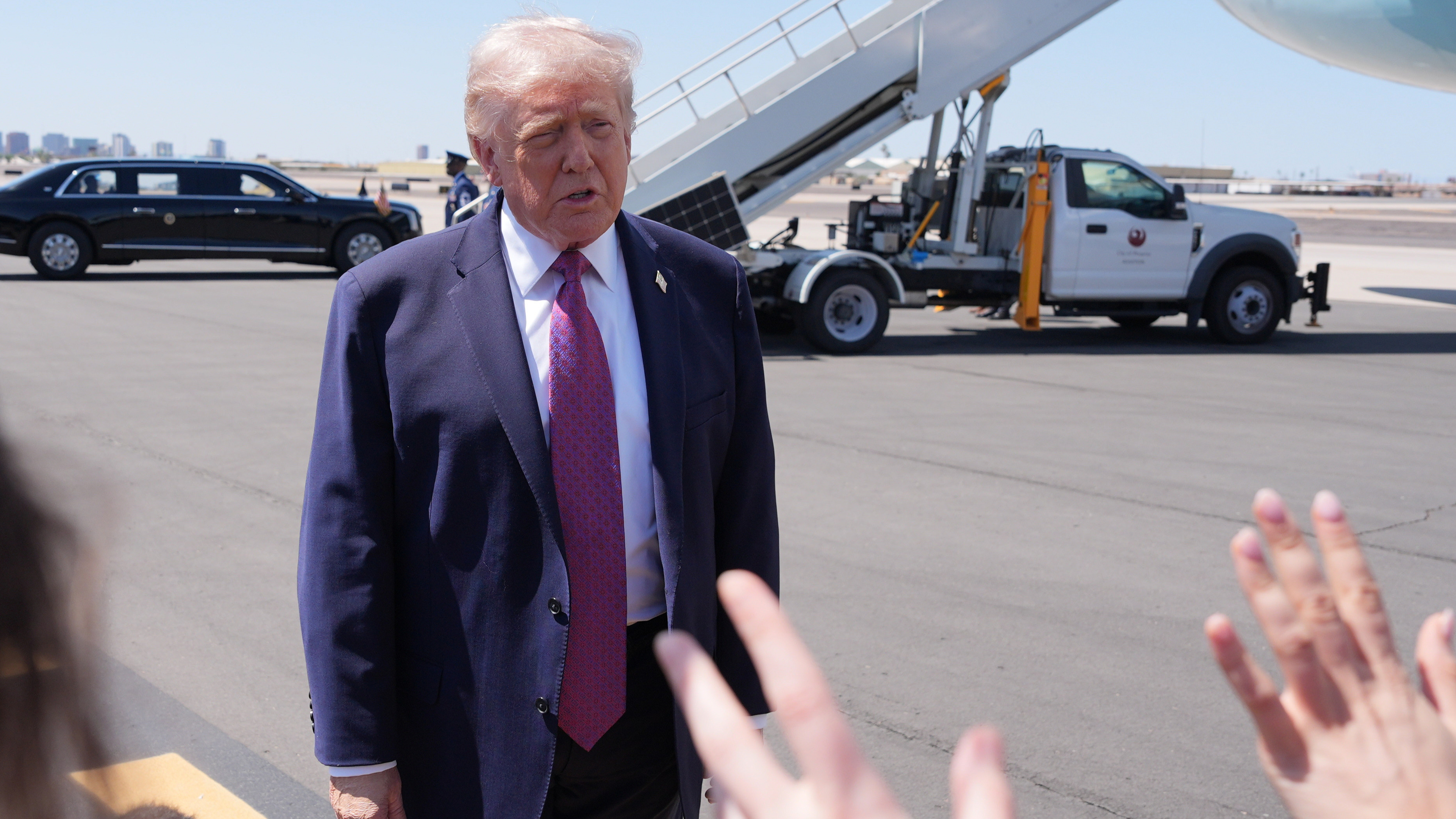
President Donald Trump continued to tout the progress between the U.S. and Iran upon touching down in Phoenix on Friday, telling reporters that the two countries have had "some very good discussions."

"We've done a good job, but we'll see," Trump said.

"Talks are going on and will go on over the weekend, and a lot of good things are happening," Trump continued, adding, "That includes Lebanon, too."

President Donald Trump talks with reporters after arriving on Air Force One, Friday, April 17, 2026, at Phoenix Sky Harbor International Airport in Phoenix.

Trump acknowledged that there "could" still be differences that the U.S. and Iran need to work out, despite saying earlier Friday that Iran has "agreed to everything."

"Well, there could be," Trump said when asked to respond to reports of Iran claiming the two countries still have significant differences. "Let's see what happens. If there are, we'll have to straighten it out. But I don't think there's too many significant differences."

The president also insisted that the U.S. blockade in the Strait of Hormuz will end once the U.S. and Iran sign a deal.

"When the agreement is signed, the blockade ends," Trump said.

-ABC News' Nicholas Kerr and Emily Chang

ABCNews logo
Apr 17, 2026, 10:24 PM GMT

White House insists Strait of Hormuz is 'completely open'

The White House is pushing back against claims by the Islamic Revolutionary Guard Corps that vessels transiting the Strait of Hormuz will require permission, reiterating Friday that the Strait is "completely open for business."

"As President Trump said, the Strait of Hormuz is completely open for business, and Iran has agreed to never close the Strait again," White House deputy press secretary Anna Kelly said in a statement when asked to respond to the IRGC's claim. "Thanks to the United States' successful blockade of Iranian ports, the United States also maintains maximum leverage in negotiations to eliminate Iran's nuclear threat for good."

The White House response comes even as ship tracking data shows traffic still shows minimal traffic transiting through the region. About two dozen ships started to make their way toward the strait Friday morning amid announcements from Trump and Iranian Foreign Minister Abbas Araghchi that it was reopened, before most of the ships appeared to turn around and head back into the Persian Gulf, according to ship data from MarineTraffic.

-ABC News' Nicholas Kerr

ABCNews logo
Apr 17, 2026, 10:41 PM GMT

Iran says its enriched uranium is not going anywhere

Iranian Foreign Ministry spokesperson Esmaeil Baqaei denied that Iran's enriched uranium would be handed over to the U.S. in an interview on Iranian state TV.

"Iran's enriched uranium is not going to be transferred anywhere under any circumstances," he said.

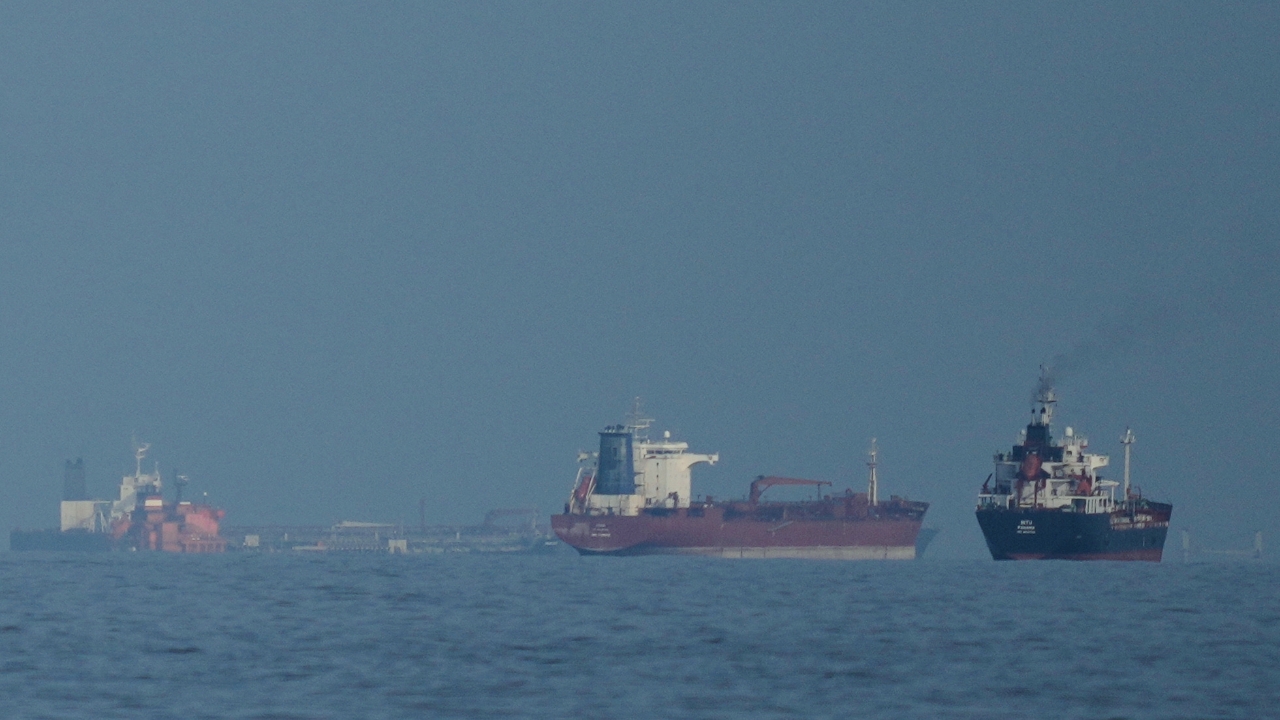
FILE - Oil tankers and cargo ships line up in the Strait of Hormuz as seen from Khor Fakkan, United Arab Emirates, Wednesday, March 11, 2026.

He also referred to the reports that Iran would cease to enrich uranium as "part of a media campaign that has been launched to influence the negotiators and the negotiating table."