Rubio said Iran would not be allowed to charge Strait of Hormuz tolls.
Last updated: Tuesday, April 28, 2026 10:56AM GMT
President Donald Trump announced "major combat operations" against Iran on Feb. 28, with massive joint U.S.-Israeli strikes targeting military, government and infrastructure sites.
Following the announcement of a two-week ceasefire, initial U.S.-Iran talks in Pakistan earlier this month failed to reach a peace deal.
Trump later announced the open-ended extension of the ceasefire and the continuation of the blockade until Iran's proposal is submitted and discussions are concluded "one way or the other."
US achieved none of its goals in Iran, Araghchi says
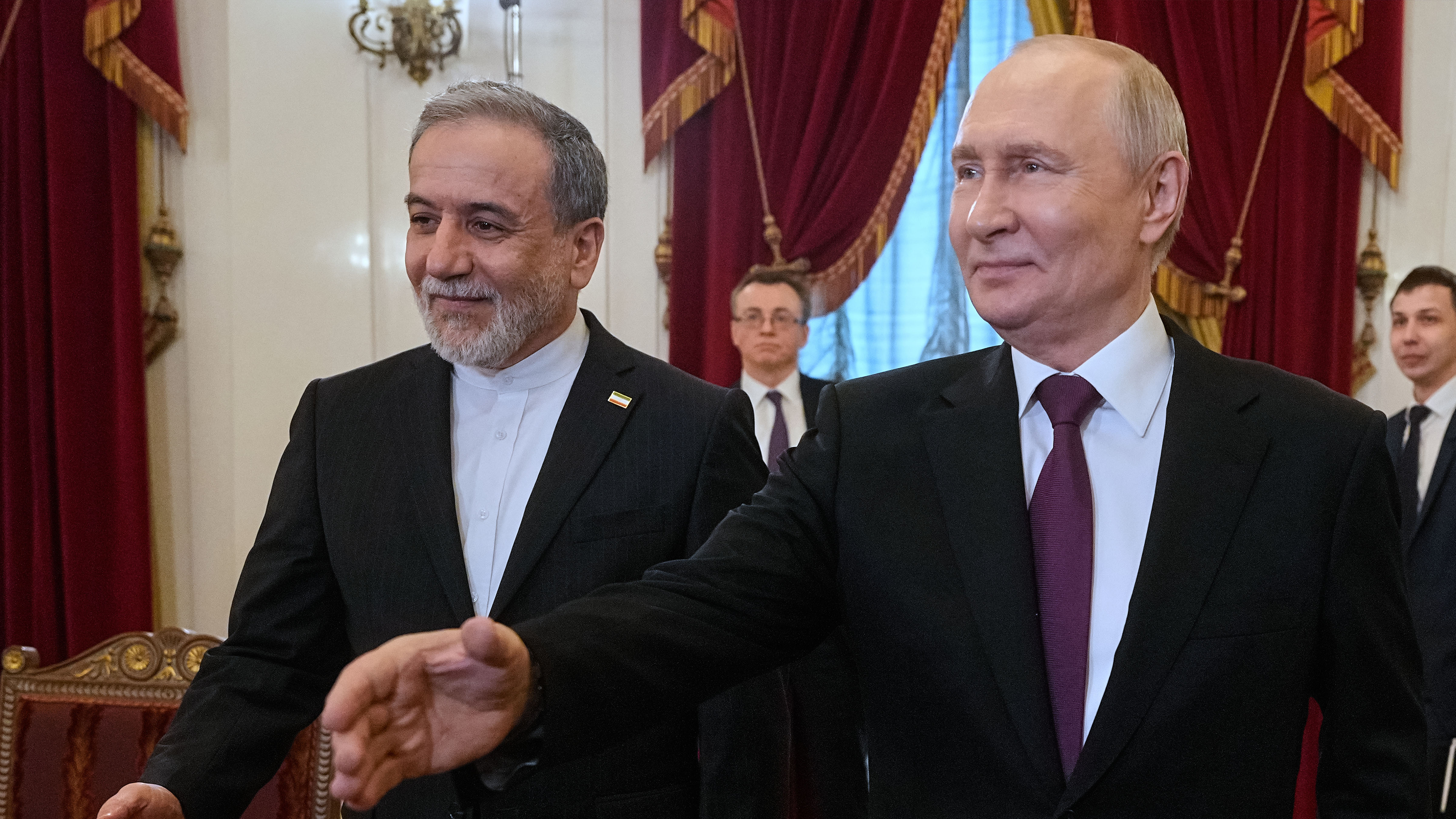
Speaking to a reporter in St. Petersburg during his visit to Russia, Iranian Foreign Minister Abbas Araghchi said that the U.S. had achieved none of its goals and was therefore asking for negotiations -- a request Araghchi said Iran is "considering."
Regarding bilateral Iranian-Russian relations, Araghchi said the two countries are "strategic partners" and that cooperation between them would continue.
BySomayeh Malekian and Joe Simonetti
3 hours and 16 minutes ago
Rubio says competing 'hardliner' factions in Iran complicating talks
Speaking to Fox News in an interview published on Monday, Secretary of State Marco Rubio said that competing groups of "hardliners" in Iran are complicating stalled peace talks with the U.S.
"They're all hardliners in Iran. But there are hardliners who understand they have to run a country and an economy and there are hardliners that are completely motivated by theology," Rubio said.
"The hardliners that are motivated by theology are not just the (Islamic Revolutionary Guard Corps) officials, but obviously the supreme leader and the council that surrounds him," Rubio continued.
"And then you've got the political class -- the foreign minister, the president, the speaker, the majlis, these guys -- they're hardliners too, but they also understand the country has to have an economy. People have to eat. They have to figure out a way to pay salaries in their government," Rubio said.
"Unfortunately, the hardliners, with an apocalyptic vision of the future, have the ultimate power in that country," Rubio added.
Secretary Marco Rubio suggested to Fox News in an interview on Monday that Iran's peace proposal falls short of the U.S. conditions for ending the war, now entering its third month.
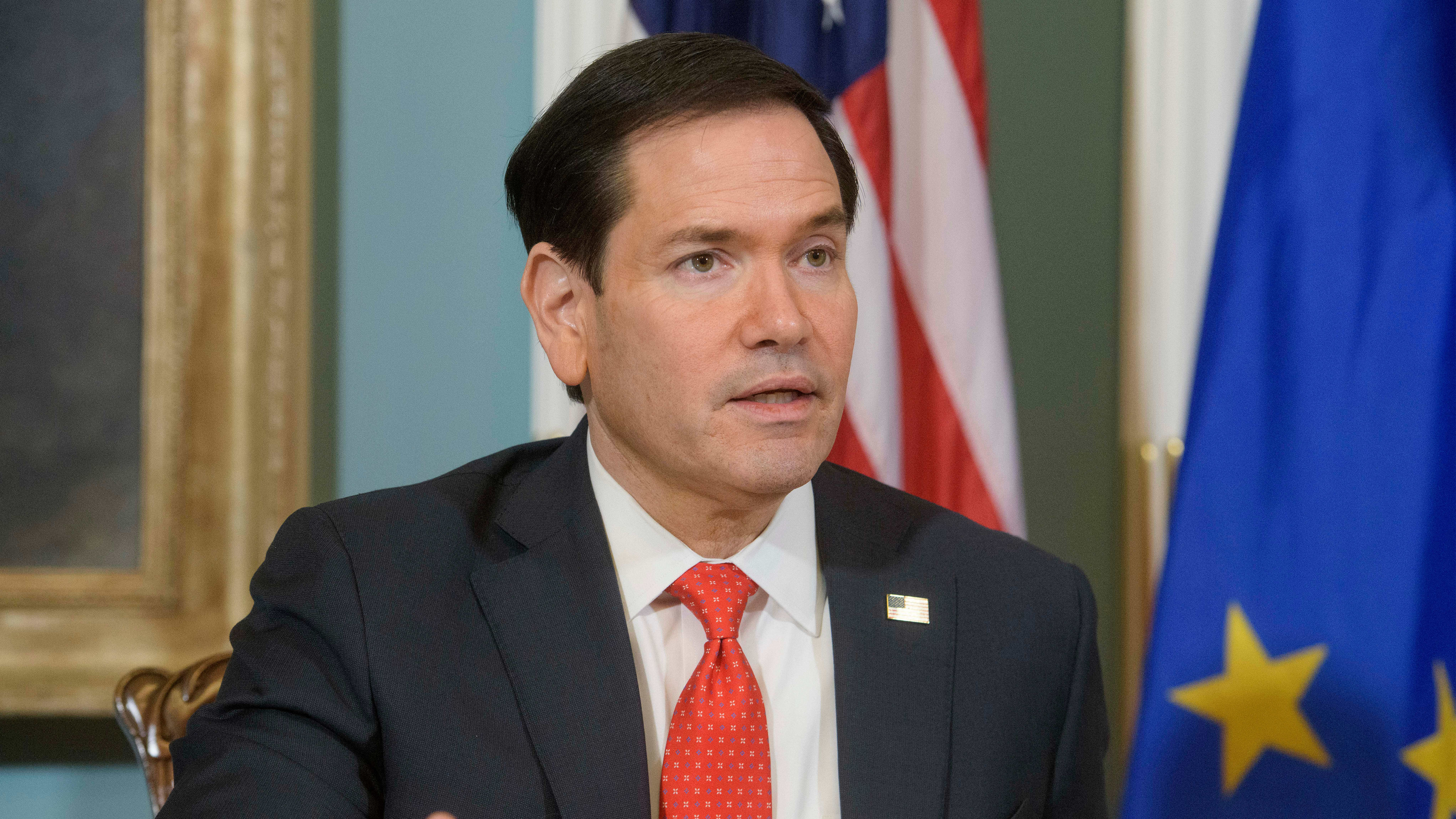
Secretary of State Marco Rubio, speaks during a Memorandum of Understanding signing ceremony Friday, April 24, 2026.
Two officials familiar with the matter told ABC News that the Iranian proposal consists of a loosening of Tehran's grip on the Strait of Hormuz in exchange for the lifting of the U.S. blockade. Talks on Iran's nuclear program would then be pushed back to an unspecified future date, Tehran's proposal suggested.
Rubio, though, said the nuclear issue was at the heart of the U.S. position. "The nuclear question is the reason why we're in this in the first place," Rubio said.
Rubio also said the U.S. would not allow Tehran to retain control over the Strait of Hormuz, or to continue to charge tolls to shipping passing through.
"Those are international waterways. They cannot normalize, nor can we tolerate them trying to normalize, a system in which the Iranians decide who gets to use an international waterway and how much you have to pay them to use it," he said.
Rubio underscored U.S. concerns about the regime's ability to agree to a deal and the status of new Supreme Leader Mojtaba Khamenei.
"One of the impediments here is that our negotiators aren't just negotiating with Iranians. Those Iranians then have to negotiate with other Iranians in order to figure out what they can agree to, what they can offer, what they're willing to do, even who they're willing to meet with," Rubio said.
Asked whether he believed Mojtaba Khamenei was still alive, Rubio replied, "We have indications that he is. Obviously they claim that he is. We don't have evidence that he's not."
"I think the question between alive and in power are two different questions. You can be alive -- but I think the unresolved questions here are does he have the same credibility as his father did," Rubio said.
Rubio also suggested that the Iranian proposal may not have the backing of all factions jostling for influence in Tehran. "I think there are still questions about whether the person submitting it had the authority to submit that offer," he said.
Nonetheless, Rubio said he believed the Iranians "are serious about getting themselves out of the mess that they're in."
ByVictoria Beaulé
3 hours and 22 minutes ago
Americans have no strategy, entire nation is being humiliated by Iran: German chancellor
In an address to students on Monday, German Chancellor Friedrich Merz said the U.S. has "no strategy" with Iran.
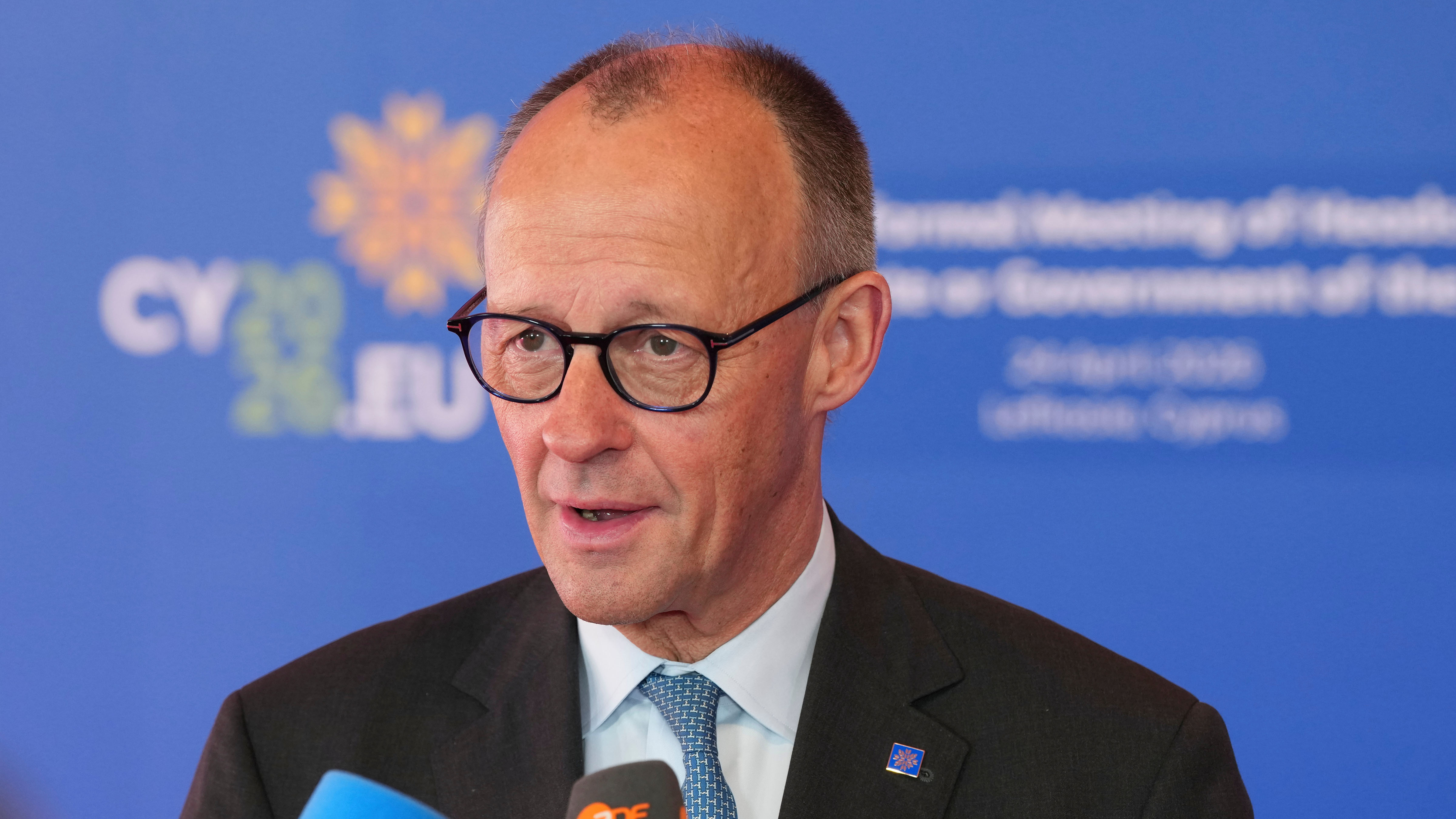
German Chancellor Friedrich Merz speaks with the media as he arrives for the EU Summit in Nicosia, Cyprus, Friday, April 24, 2026.
"I cannot see what strategic exit the Americans are now opting for, especially as the Iranians are obviously negotiating very skillfully -- or, rather, very skillfully not negotiating and letting the Americans travel to Islamabad (in Pakistan) only to leave again without any results," Merz said. "An entire nation is being humiliated by the Iranian state leadership, particularly through these so-called Revolutionary Guards."
"We offered, as Europeans -- and said that we were willing -- after the end of negotiations to help getting the Strait of Hormuz open again," he continued. "... We can help there but first the fighting needs to end. And at the moment I do not see how this can be realized in the near future because the Iranians are clearly stronger than one thought and the Americans clearly don't seem to have a convincing negotiating strategy."