How the 49ers, NFL made 'seamless' travel plan to Australia

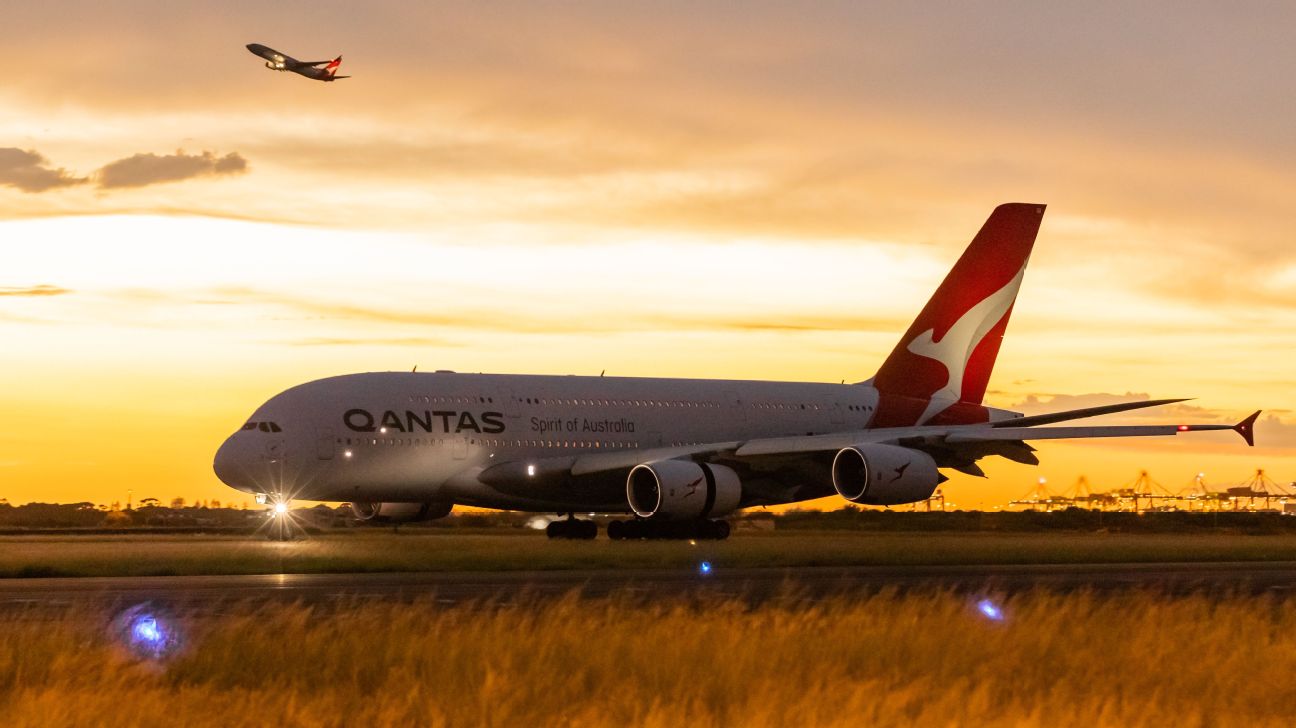
MELBOURNE, Australia -- By the time the San Francisco 49ers took off for Australia late Wednesday night Pacific Time, their Qantas Airbus A380 charter flight carried more than 95,000 pounds of human and material cargo. The payload included 220 passengers and their checked luggage, weighing in at an estimated 62,000 pounds, alongside 33,000 pounds of essential team equipment.
Perhaps more important than the cold weather gear (remember, it's winter in Australia), helmets, shoulder pads and jerseys packed tightly into the aircraft was what wasn't on it: dirt.
As the 49ers and the NFL collaborated over the past four months to move their football operation nearly 8,000 miles from the Bay Area to Melbourne, a unique challenge emerged of ensuring no California soil hitched a ride into one of the most isolated, ecologically guarded nations on the planet. Australia enforces some of the strictest biosecurity measures in the world. Introducing any sort of invasive species, insects or plant disease could lead to ecological and/or economic disaster, per the Australian government's Department of Agriculture, Fisheries and Forestry. And while the cleaning process didn't need to be over the top -- the goal was to eliminate any large clumps of dirt or grass -- it added a layer of consideration as the Niners prepared for departure.
"Australia is unlike any other market we've been to," said Joe Valentine, the NFL's director of international football operations & logistics. "This is a completely different operation. Being 8,000 miles away from home, 16-hour flight, 17-hour time difference, it's very, very different than the European setup or even the South American setup that we've become accustomed to. We've been way out more in front of this one because it is so different."
Though anexhibition was played between the Broncos and Chargers in Australia in 1999, the49ers are the league's guinea pigswhen it comes to operations and travel logistics for a regular-season game down under. San Francisco's 16-hour flight touched down in Melbourne on Friday morning Australian Eastern Standard Time (Thursday afternoon PT), giving the team a week to practice before itsseason opener on Sept. 11 at 11:35 a.m. AEST (Sept. 10 at 5:35 p.m. PT). Meanwhile, the Rams are planning to arrive next Thursday and stay in Melbourne for roughly 24 hours.
In this unchartered operational territory, some of the obstacles that 49ers and NFL officials pointed to include visa and passport acquisition; finding a plane big enough to carry the team comfortably; figuring out how to get through customs and security at the Melbourne airport; ensuring the practice facilities, hotel and stadiums were properly set up for an NFL team; and then how to break it all down and get back to California.
The preparation started back in March, Valentine said, when the NFL asked the Rams and 49ers to send any items they would want but didn't immediately need for Week 1 to a cargo ship in New York. That cargo ship also carried an additional 60,000 pounds of equipment from the league, including goal posts, Gatorade products and coolers, field equipment (chains, pylons, etc.), practice site equipment and medical gear.
The ship departed on April 15 and arrived a little more than two weeks ago. And lest anyone believe Australia didn't take its biosecurity efforts seriously, customs agents denied San Francisco's supply of protein powder from entering the country.
Under normal circumstances, every NFL team is responsible for makings its own travel arrangements. But with such a long flight and so much to take on it, the league office played a large role in helping the 49ers figure out a flight plan.
In search of a plane that would provide plenty of space for a football team, the league worked with Qantas to secure one of its 10 Airbus A380s. Those planes have 84 lie-flat seats (14 first class plus 70 business) and 60 premium economy seats out of the roughly 400 total seats. As per usual, the Niners gave players the most desirable seats so they could get their required sleep. Qantas even went so far as to provide some customized pajamas to help the cause.
Because those planes are so large, they can't simply fly out of any airport whenever the teams want. The Niners said they evaluated all their options and decided late in the spring to do the full week trip.
"Obviously, that comes with a lot of planning and process to get two very large airplanes off the ground and make sure they land in Melbourne in the right fashion," said Charlotte Offord, the general manager of NFL Australia and New Zealand. "There's a few logistics there."
For domestic games, teams generally fly into the opposing city and never set foot in the terminal. Instead, they simply go through security either at the team facility before traveling to the airport or on the tarmac. When arriving in Australia, it was not quite as straightforward, though the league believes it created something as close to normal as possible.
"There's a lot of steps to it," Valentine said. "We want it to be seamless; we want it to be efficient."

Before the Niners boarded their plane, they had to navigate a strenuous monthlong passport and visa distribution process. The team hosted the Department of State for three days at its Santa Clara facility and worked with the San Francisco Passport agency to ensure everyone had one in time before departure.
Visa acquisition was a far more arduous process that required attention nearly every day of the final month before departure. Players and coaches needed a Subclass 408 working visa, which requires more information and effort to acquire than the ETA digital travel permit that behind-the-scenes folks needed.
The entire process became more difficult when it collided with the reality of building a final 53-man NFL roster and practice squad. As late as Tuesday afternoon, the Niners were still finalizing the visa process, which left one practice squad signee asking his parents to overnight his passport from his house.
"I've never [had to] ask a potential practice squader, 'Do you have a passport?'" general managerJohn Lynch said. "Those are questions we have to ask now ... there's a lot of little logistics like that that are complicated by this. You know, we're embracing it. We're having a plan for everything and we're getting it done."
After completing the longest flight any NFL team has ever taken for a regular-season game, the 49ers will spend the rest of the day recovering from the flight at their team hotel. An advance crew of dieticians, security, information technology, logistics, equipment, video and kitchen staff arrived early to convert the hotel into the team's Melbourne headquarters.
When the 49ers practice Saturday, Monday, Tuesday and Wednesday at AAMI Park, they'll walk into the home of the Melbourne Storm (four-time winner of the National Rugby League) and two A-League soccer teams (Melbourne Victory FC and Melbourne City FC). The NFL helped tweak the stadium's facilities to replicate the team's recovery environment in Santa Clara, adding hot and cold tubs, medical gear and training equipment.
The 49ers also consultedmultiple rugby teams, European soccer teams and a couple of Australian rules football clubs for local support on where to find massage therapists and different health clubs.They even talked to Stanford football, which traveled to Sydney in 2017 for a game against Rice. For game day, the league sourced local vendors to create the specs of an NFL locker room at the Melbourne Cricket Grounds and expand coaches booths to fit the staff size of the teams.
"In every stadium we go through, we're knocking down walls and we're plumbing and we're adding showers and toilets and cold tubs and hot tubs if they don't have them," said Jon Barker, the NFL's senior vice president and global head of major event productions and operations. "What we want is a player to feel like things really haven't changed that much and they're in the environment that they understand."
In all, Valentine and his colleagues made four trips to Australia before arriving again this week. Two trips took place before the teams joined them to go through operational logistics, then two more alongside the teams' operations staff members in the spring and summer.
After the game concludes on Sept. 11, both the Rams and Niners will immediately fly back home. Unlike the trip to Australia, though, Valentine said the teams will be "basically flying back on an empty aircraft."
Because the customs process can take so long for the equipment -- Valentine estimates it would be up to a few more hours -- the league will fly both teams' freight back on a separate cargo plane. The 49ers will add about 20 additional passengers, as they're flying back with some of the staff that went early and a few people that went after the team left.
Once the cargo plane lands back in California, the supplies will be divvied up and delivered back to the practice facilities on Sept. 12. Back in Santa Clara, the 49ers will await their equipment and begin preparations for their Sept. 20 matchup at home against the Dolphins.
"[The] second beast of this operation is it's not just one game right now," Valentine said. "We have to get them back and the equipment back in time for them to prepare for Week 2."br/]