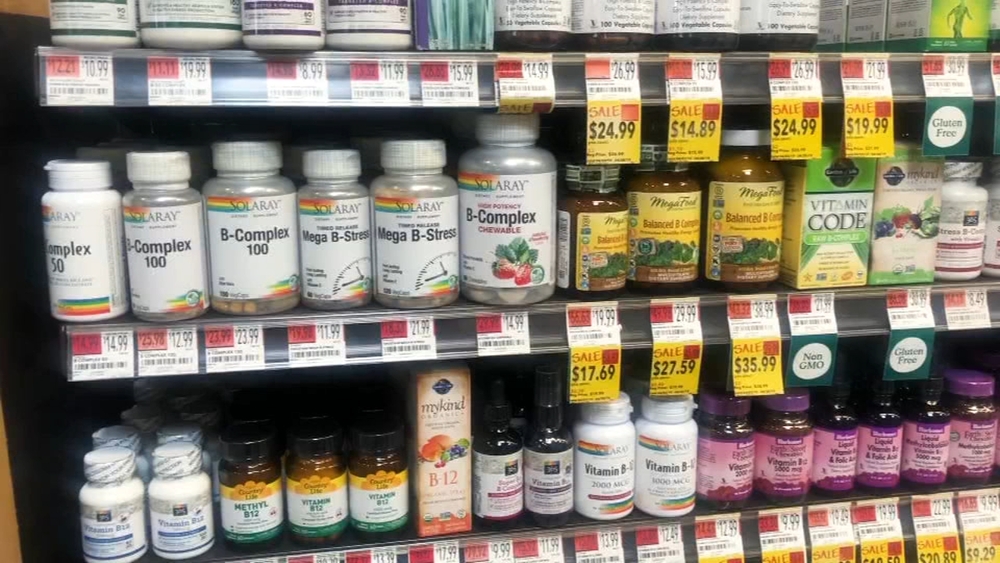
More than a third of children and teens take dietary supplements, CDC data shows
According to the report, 35.7% of youth ages 0 to 19 take dietary supplements.



FRESNO, Calif. (KFSN) -- New data from the Centers for Disease Control and Prevention's National Center for Health Statistics suggests more than one-third of children and teenagers take dietary supplements, as pediatricians emphasize that a balanced diet remains the primary source of vitamins and minerals for most young people.
According to the report, 35.7% of youth ages 0 to 19 take dietary supplements. Among adults age 20 and older, that figure rises to 60.2%.
The report also found that, compared with the 2013 to 2014 period, the percentage of young people taking at least two dietary supplements increased by nearly 5% between August 2021 and 2023.
Dr. Sireesha Palkamsetti, a pediatrician with Saint Agnes, said vitamins and minerals must come from dietary sources.
"The issue is that vitamins and minerals are not made in our body, so we need them from a dietary source. So if you eat enough, like a good diet, it should cover all your sources," Dr. Palkamsetti said.
Dr. Palkamsetti recommends vitamin D supplements for newborns and iron supplements for infants who are still breastfeeding after 4 months.
"Breast milk doesn't have enough vitamin D, so that's one thing where they definitely need vitamin D supplements at that time, just at least until they start to get a diet, which is rich in vitamin D. Then you can stop it," she said.
Pediatricians say some children and teens with restrictive diets or eating patterns may be more likely to benefit from supplements.
"Children with conditions that impair nutrient absorption-such as inflammatory bowel disease, celiac disease, cystic fibrosis, or those who have undergone intestinal surgery-may have difficulty absorbing fat-soluble vitamins and other essential nutrients. These children often benefit from individualized supplementation under the guidance of their healthcare provider. Additionally, some neurodivergent children, including those with autism spectrum disorder, may have highly selective eating patterns that limit dietary variety. When food choices become significantly restricted, a multivitamin or targeted nutritional supplementation may be appropriate after evaluation by their pediatrician," Dr. Palkamsetti said.
For most children, pediatricians recommend obtaining nutrients through a healthy, well-balanced diet. They say fruits, vegetables, legumes, lentils and whole grains, along with protein and carbohydrates, provide most of the vitamins and minerals children need.
Dr. Palkamsetti encourages families to focus on variety at mealtime.
"Make sure it is colorful. I normally advise at least five colors on your plate," she said.
For parents concerned that their children are not getting enough vegetables and are considering supplements, Dr. Palkamsetti said common store-brand vitamins are generally acceptable when used according to label directions.
"The regular store-bought Costco brand vitamins are totally fine. Just go by their recommendations. If it says one or two pills less than two years, I would talk to your doctor before you kind of give it," she said.
Pediatricians say parents with questions about supplements or specific nutritional concerns should consult their child's doctor before beginning a vitamin regimen.
For news updates, follow Danyelle Burke North on Instagram and TikTok.