'He's got it': An oral history of the NBA's COVID-19 shutdown -- and how it changed sports forever

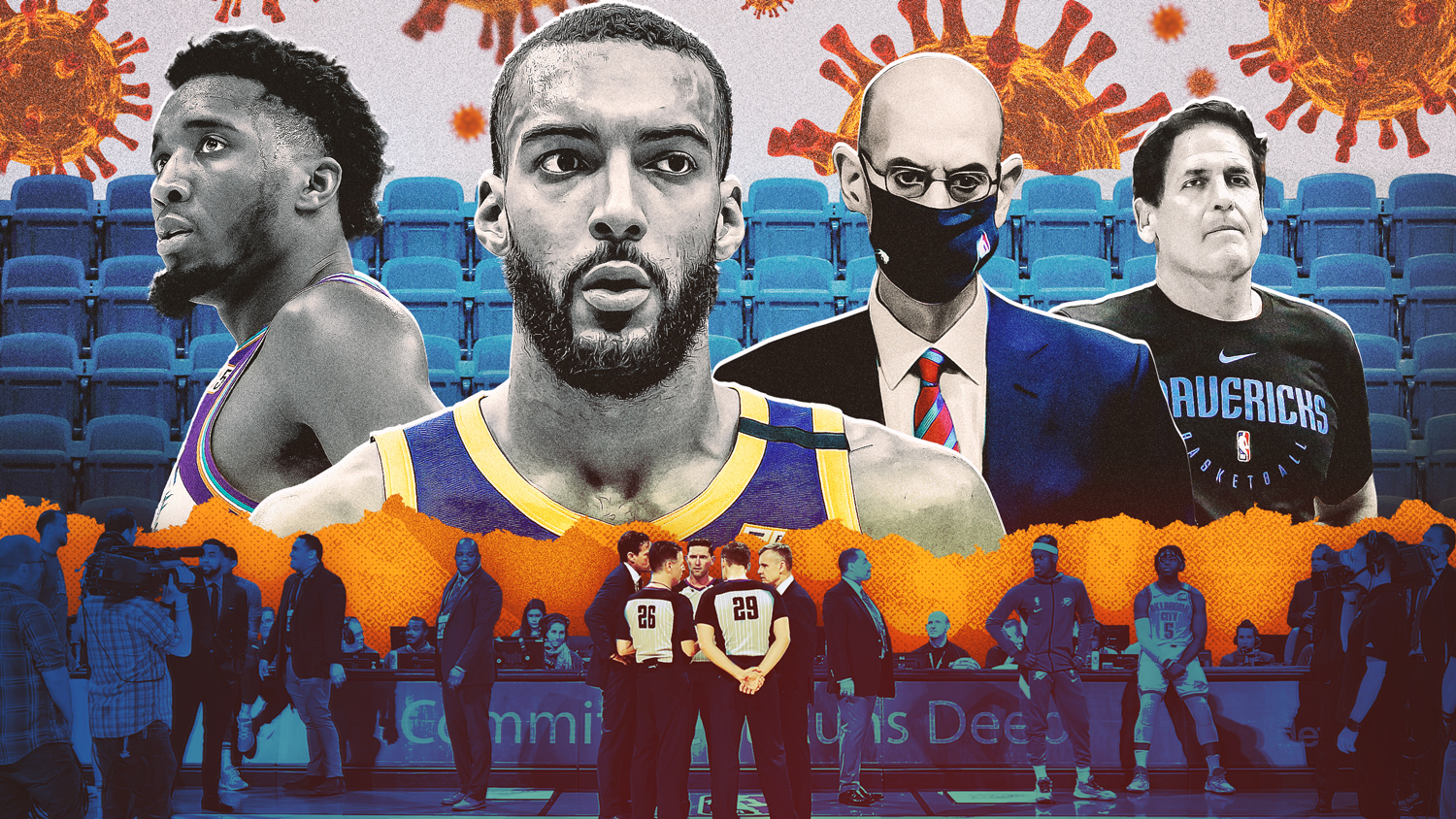
NBA COMMISSIONER ADAM SILVER entered the Barclays Center in Brooklyn before the hometown Nets hosted the Detroit Pistons. It was Chinese Cultural Night. The Nets players wore warmup shirts honoring the Lunar New Year, and the starting lineups were announced in Chinese. Traditional Lion Dancers were scattered throughout the arena. On the main concourse, fans could have their names written in custom Chinese calligraphy and enjoy nian gao desserts, also known as Chinese New Year rice cake.
Before the game, Silver stepped into the Diamond Lounge, a private room inside the arena, where a small reception recognizing local Chinese Americans, namely business leaders, was being held. The small space was crowded, with close to 50 attendees.
At the bar, Silver spotted a familiar face, Dr. David Ho, a renowned virologist who had consulted with the NBA in the early 1990s when Magic Johnson announced he had tested positive for HIV. It was Ho's second Nets game at Barclays Center, and he had been personally invited by Nets owner Joe Tsai.
Ho -- a professor of medicine at Columbia University Medical Center in New York and the founding director of the Aaron Diamond AIDS Research Center -- immediately recognized Silver. They greeted each other with pleasantries, but very quickly, with COVID-19 dominating the headlines, Silver broached a question.
"What do you think is going to happen?" Silver asked.
It was Jan. 29, 2020, a few weeks after Silver first heard about a virus spreading through China from colleagues in the league offices there, and six days after deciding to close those offices as a precaution.
Ho had first heard of the virus around Christmas 2019 from specialists in China with whom he had worked when he served as an adviser to the Chinese and Hong Kong governments during the SARS outbreak in 2002. During that time, Ho had traveled to China and Hong Kong.
"You would not believe how that region was affected," Ho told ESPN. "You could go to Beijing and there would be no cars on the street."
Ho didn't know what kind of threat COVID-19 posed, but he knew that if the Chinese government was willing to lock down the city of Wuhan -- home to 11 million residents and the site from which the outbreak was said to have begun -- on Jan. 23, then the threat was serious.
Back inside the Diamond Lounge, Ho pointed out something Silver would never forget.
"If you notice," he told Silver, "the restaurants in Chinatown are empty."
Silver paused.
"The Chinese community in the U.S. are quite aware of what's going on in China -- much more than the general public," Ho said. "And the Chinatown restaurants are a reflection of that. People are scared."
The two talked for 15 minutes. Silver had already been concerned about the possibility of filling NBA arenas with nearly 20,000 fans, but the unemotional, matter-of-fact tone from Ho was striking. The next morning, on the same day the World Health Organization declared the COVID-19 outbreak a global public health emergency, Silver called Ho and asked whether he would serve as a consultant for the NBA on COVID-19. Ho agreed.
The next day, Jan. 31, the league office sent out a memo to NBA general managers, team physicians and athletic trainers.
Six cases had been identified in America, it noted. It stated that the league was "closely monitoring the spread of a respiratory illness caused by a novel coronavirus." It included links to the Centers for Disease Control and Prevention and recommendations about practicing good hygiene, including washing hands frequently with soap, avoiding close contact with people who were sick, and not sharing water bottles, towels, glasses or eating utensils.
The subject line: "coronavirus outbreak."
BY EARLY FEBRUARY, Silver began buying extra toilet paper.
"My wife was laughing at me and saying, 'Why are you doing this?'" Silver told ESPN. "I go, 'This is what we're talking about every day at work. It's only toilet paper, but let's get the extra toilet paper.' She told me I was being an alarmist."
On Feb. 15, Silver, David Weiss, then the NBA's senior vice president of player matters, and John DiFiori, the NBA's director of sports medicine, entered a hotel conference room during All-Star Weekend in Chicago. They were there for one of the annual meetings with the NBA Physicians Association. Dr. Lisa Callahan, the Knicks' team doctor and the president of the physicians' association, recalled the league's leadership "really putting COVID-19 on our radar as a potential league issue."
On Feb. 24, 27 and 29, the league sent out additional memos to teams, the last of which outlined the possibility of the virus spreading further. Teams were advised to consult with local infectious disease specialists, prepare to implement temperature checks on players and staff, and consult with local medical centers -- especially for testing -- in case anyone on a team showed symptoms of or was exposed to the virus. In early March, another memo provided "short-term recommendations," including the avoidance of autograph signing and prioritizing fist bumps over high-fives.
On March 2, Golden State Warriors coach Steve Kerr and members of his staff attended a concert in Denver the night before facing the Nuggets. They packed inside a small venue.
"Everybody was jammed together, and we were kind of sitting there wondering, is this OK?" Kerr told ESPN. "Are we supposed to be doing this?"
On March 6, the NBA sent another memo, preparing teams for the possibility of playing without fans.
Three days later, after returning from a four-game road trip, then-Utah Jazz center Rudy Gobert prepared to speak to reporters after a morning shootaround in Salt Lake City. In advance of a home game against Toronto that night, Gobert sat at a table lined with microphones and recorders while reporters sat at tables several feet away -- aneffort to create social distance and limit potential spread.
After he spoke, Gobert rose from the table and turned to leave, then he paused, turned back to the microphones and playfully touched them and the recorders on the table. It was his way of saying that he wasn't especially concerned about the spread of the virus.
THE NEXT DAY, March 10, members of the Jazz front office and their athletic training staff gathered for a 45-minute meeting about COVID-19 protocols at the practice facility. The meeting was led by the chief medical officer from the University of Utah. "We took it very seriously," Mike Elliott, then the Jazz vice president of health and performance, told ESPN, "and wanted to make sure that we were prepared and that our athletes heard it from a reputable source."
The team flew to Oklahoma City around 8 p.m.ET to face the Thunder the next night in a critical game for playoff seeding. Soon, Jazz players and staff realized that Gobert wasn't feeling well and had begun experiencing symptoms earlier that day -- "a little cold," he would later tell ESPN. After the Jazz landed in Oklahoma City, Dennis Lindsey, then the executive vice president of basketball operations for the Jazz, received a call from Elliot, who told him Gobert wasn't feeling well.
"In my mind," Lindsey said of that call, "it's like, OK, here we go."
The Jazz were staying at the 21c Museum Hotel in downtown Oklahoma City. After checking in, Eric Waters, then the Jazz's head athletic trainer and director of medical services, visited Gobert in his room and found that Gobert was experiencing a fever with chills.
By 10 p.m. ET, the Jazz were on the phone with Dr. Jim Barrett, the Thunder's team doctor. By 11:15 p.m., Barrett arrived at the 21c hotel.
"At the time, there was some question as to whether or not there were any COVID tests in Oklahoma, and if there were, there was an understanding that there weren't many," Elliott said. "So they weren't just going to start passing out tests to us just simply because we were an NBA team, so we needed to have a bona fide reason for someone to administer one of those tests. The strategy was that they would test Rudy for strep throat, for influenza A and B and then administer a PCR-20 test [for 20 human respiratory viruses] to basically kind of rule out any other sort of virus, which would leave us to the point that we would need to mobilize one of those COVID tests."
Around midnight, the team heard back that the tests for influenza and strep throat were negative. By 10 the next morning, Gobert's PCR-20 test came back negative, too. The Jazz shared that information with their doctors and with the league office. Barrett had been in touch with Dr. Linda Salinas, who was from the infectious disease department at the University of Oklahoma Medical Center, and the state Board ofHealth decided Gobert should be tested for COVID-19.
By 9:32 p.m. on March 11, 2020, the NBA announced that a Utah Jazz player -- later identified as Gobert -- had tested positive for COVID-19 and that the league was suspending its season. Dr. Vivek Murthy, a former U.S. surgeon general who had also been consulting with the NBA on the virus, was home in Washington, D.C., with his wife, Alice Chen, and their two children, then ages 3 and 2. The TV was on, and they saw the news of the NBA's decision. Murthy and his wife turned to each other. They didn't say a word.
"Sports have always been an important part of American culture," Murthy told ESPN then. "And when the NBA suspended its season, that was a powerful signal to people that something profound about our way of life is about to change."
For many in America, that announcement marked the beginning of the COVID-19 pandemic that would kill more than 1 million Americans -- a figure higher than the American death toll in the Civil War and World War II combined -- and millions more around the world.
"That was a key moment in NBA history," Ho said. "And as you look back, it clearly is a key moment in American history as well."
On the fifth anniversary of that announcement, this is the hour-by-hour story of the key moments that led up to it, and the aftermath, in the words of those who were directly involved.
After leaving the airport in Oklahoma City, the Jazz arrive at the 21c Museum Hotel downtown. Reporters covering the Jazz are notified the team will hold its media availability for the shootaround the following morning, March 11, at the hotel instead of at the arena. Gobert doesn't attend the shootaround, nor does Jazz guard Emmanuel Mudiay. Both are said to be feeling sick.


After Gobert wakes up that morning, he says he's feeling much better and prepares to be tested for COVID-19.
At 10:59 a.m., Dr. Anthony Fauci, the top infectious disease expert in America, testifies before Congress about the coronavirus outbreak in America and issues a warning. "It is going to get worse," he says.
Meanwhile, at approximately noon, then-Golden State Warriors president Rick Welts enters a meeting with then-San Francisco Mayor London Breed at City Hall.
Two days before, nearby Santa Clara County had banned gatherings of more than 1,000 people, and Warriors officials believed their games would soon be impacted, too. The Warriors are slated to host the Brooklyn Nets at Chase Center the next night, Thursday, March 12.

Welts presses the issue, but Breed doesn't budge: All gatherings of more than 1,000 people in the city were going to be banned. In addition to the Nets game being played without fans, all events at the Chase Center would be canceled through March 21. After the meeting, Welts steps outside City Hall and calls then-Warriors GM Bob Myers to share the news.
The players are getting ready for practice. Bob and I went into the locker room. Bob says, "Rick's got something to tell you." And I say, "Guys, we get to play tomorrow night, but the city's going to make us play in front of no fans." And I can remember it probably was only 20 seconds, but it felt like about two minutes where people were looking at me -- what does that mean? Playing in front of no fans?
And then honestly, the only person to speak up was Stephen Curry, who said, "OK, well, can we have our own playlist?"
At 12:24 p.m., the Jazz list Gobert as questionable with an illness.
At 12:26 p.m.: World Health Organization director-general Tedros Adhanom Ghebreyesus officially declares COVID-19 a global pandemic. Soon after that announcement, then-National Basketball Players Association executive director Michele Roberts arrives at the NBA's Midtown Manhattan headquarters for a 1 p.m. meeting with the league's leadership, including Silver.
Five days before, Roberts had attended a New York Knicks-Oklahoma City Thunder game at Madison Square Garden. She had talked to then-Thunder power forward Danilo Gallinari, whose concern about Italy -- and the virus -- had only grown. "That's when it occurred to me, this is not something that's just a curiosity," she told ESPN. "This has got to make its way to the U.S. So I knew it was coming at that point, I just knew it was coming, and I was worried to death."

The notion of having these organized games, playing in these 10,000-plus [capacity] arenas with how many people were affected, was ridiculous. So I remember we all said, "OK, this is not debatable, this is not negotiable." So when we walked in, we were prepared for a fight -- and there was no fight.
Adam said, "Absolutely, we completely concur. We're not going to have our people exposed. We're not going to have our fans come out to watch us play and have them be in a position of potentially becoming infected." So it was one of the easiest non-arguments.

I think I had floated two weeks in which we would shut down the league as opposed to playing without fans. We would shut down the league, work with Dr. Ho, public health officials, doctors, other experts, and come up with presumably a safe set of protocols, both for our players and for our fans, on what the appropriate way would be to move forward.
At around 2 p.m., Leonard Giles, then the event manager at the Chesapeake Energy Arena, where the Thunder play -- it has since been renamed the Paycom Center -- receives what he'd later describe as "weird" requests from his managers. The Jazz, he is told, want to turn an auxiliary locker room inside the arena into a secondary interview room. Giles goes into the locker room, hangs curtains on the walls and, as requested, places extra hand sanitizer around the area. He suspects something is amiss.
At 2 p.m., team doctor Barrett takes Gobert from the hotel to the University of Oklahoma Medical Center to be tested for COVID-19. They enter through a private ER entrance.

The Jazz remain in touch with the league office and the Thunder about the situation.

After being tested, Gobert returns to the hotel.
At 4:30 p.m. Silver joins a board of governors call with all 30 of the team owners.
But we did discuss on that call potentially taking a two-week hiatus. We certainly didn't leave the call saying if we got one positive test, we would shut down.
At 6 p.m., Oklahoma Governor Kevin Stitt has arrived home after a day of meetings when he receives a call from an official in the state's Commerce Department. He is told that a company that is considering expanding in Oklahoma will have officials attending the Thunder-Jazz game later that night. Stitt is asked to attend the game and meet with them.

At 6:30 p.m., Giles calls over the radio for the doors to open at the Chesapeake Energy Arena. Fans begin pouring inside. The Jazz still don't have word on Gobert's COVID-19 test.
Ten minutes later, at about 6:40 p.m., after failing to receive Gobert's test results in time for him to play, the Jazz announce he will be out.

At 7:50 p.m., with the game slated to begin at just after 8 p.m., Stitt is sitting in a first-floor restaurant inside the arena -- meeting with officials from the company considering expanding in Oklahoma -- when his cellphone rings.

At the same time, Jazz GM Justin Zanik, back in Utah, is driving home.
At 7:53 p.m., Elliott receives a text message from Barrett.

In New York, NBA executive Weiss is sitting in his office at the league's Manhattan headquarters with DiFiori when DiFiori learns that Gobert has tested positive.
And literally as I was on the phone with Rick -- he was giving me some of the details about when the test was taken, who had taken the test, how we had learned it -- on my cellphone, I then said to Rick, I got to go, [Thunder owner Clay Bennett] is calling me right now.
At 7:55 p.m., Stitt, Bennett, Brian Byrnes (a senior VP for the Thunder) and Chris Semrau (the general manager of the arena) gather in a conference room in the arena. Bennett calls Silver.
I am trying to remember whether I said to him right on the spot or I called him back. I think maybe I just talked it through with Clay and I said, based on the discussion, Clay, that we had earlier today, I said, we got to call your game. And he agreed with that, but I think it was pretty clear he wanted me to make that decision.
For all the officials on the ground in Oklahoma City, as well as for Silver and the league office, the chief matter at hand becomes what to do about the sell-out crowd of 18,203 inside the arena.

Back in the conference room, Stitt and Bennett discuss options.
I remember one of the guys in the room goes, "Well, we could pull the fire alarm and then everybody would leave." And Clay Bennett goes, "That's the stupidest thing I've ever heard." And so we go, "Well, let's go get [Presti]." And so me and Clay, we walk down the hall. My 10-year-old is like, "Mr. Bennett, am I going to get any signatures on my basketball?"
And Clay's like, "Remy, I'm going to get you all the signatures you want. You have no idea you're making history here."
On the court, players go through their warmup routines. As the starting lineups are announced, the players prepare for the game to begin. With minutes before tipoff, Bennett, Stitt and a few team officials meet in Presti's office.
At 8 p.m., Dr. Angela Dunn, then the state epidemiologist with the Utah Department of Health, is walking outside her home in Salt Lake City when she receives a text message from Utah's then-Lieutenant Governor Spencer Cox:
'S---, give me a call.'
At 8:10 p.m., Strack sprints onto the court, directly toward the officials.
As Strack runs on the court, Elliott and Lindsey are on the phone. Lindsey tells Elliott that he had just spoken with Presti and that the game will be on hold. Elliott begins making his way through the hallways of the arena toward the court. Then he sees Jazz trainer Waters, and Elliott tells Waters that he needs to call Gobert, who was back at the hotel, to tell him the results of Gobert's COVID-19 test.


Hennigan and Strack meet with the officials, Pat Fraher, Mark Lindsay and Ben Taylor.

As Strack ran onto the court, Giles receives a call over the radio, asking him to come onto the floor.

Giles and his staff practice building evacuations twice a year, but in his five years with the team at that point, they'd never had to do it in a live scenario.
But until you get to that point with 20,000 people in the arena and you're about to go over the radio and tell all of your managers and supervisors to switch to another channel and you give that call -- until you're at that point ... your heart is pounding, hands are sweating and you're doing the best you can to keep it all together.
Lynnda Parker, then-chief of clinical services at the Oklahoma City-County Health Department, is home with her son, who is watching the pregame. Parker notices the delay.

At 8:14 p.m., players from both teams rush back to their respective locker rooms. As Jazz players wave to the fans, intermittent boos rain down from the crowd.
I know, because Chris kept calling me every 15 minutes saying, "Adam, we are still not able to leave here. Can you arrange for them to bring more water and maybe some more food into our locker room?"
So I was sitting in my apartment, going back and forth with Chris, going back and forth with our office. And so he was giving me a blow-by-blow on what was happening on the ground. And I think also because he was head of the players' association, the Utah Jazz players in their locker room also kept reaching out to Chris saying, "Chris, what's going to happen to us tonight?"
As the court empties, an uneasiness settles over the crowd.
To stall, the Thunder asked their mascot and hype crew, the Storm Chasers, to entertain the crowd. The team also asked Frankie J, a Grammy-nominated artist who was the evening's halftime entertainment, to go onto the court.

As the delay unfolds, Stitt and Bennett remain in their courtside seats.


Trying to safely, orderly and effectively mobilize 18,000 people to leave an event they just arrived at was a concern, but the objective. And so the script was quickly created and delivered at 8:37 to Mario Nanni, the Thunder public address announcer, to make the announcement:
"Fans, due to unforeseen circumstances, the game tonight has been postponed. You are all safe. And take your time in leaving the arena tonight and do so in an orderly fashion. Thank you for coming out tonight. We are all safe."

Soon after the game is canceled, Dunn and her colleagues begin examining recent footage of Gobert, including when he'd touched the microphones after shootaround that Monday and when he high-fived fans as he left the court that night after the game.
The call with Gobert lasts 45 minutes.
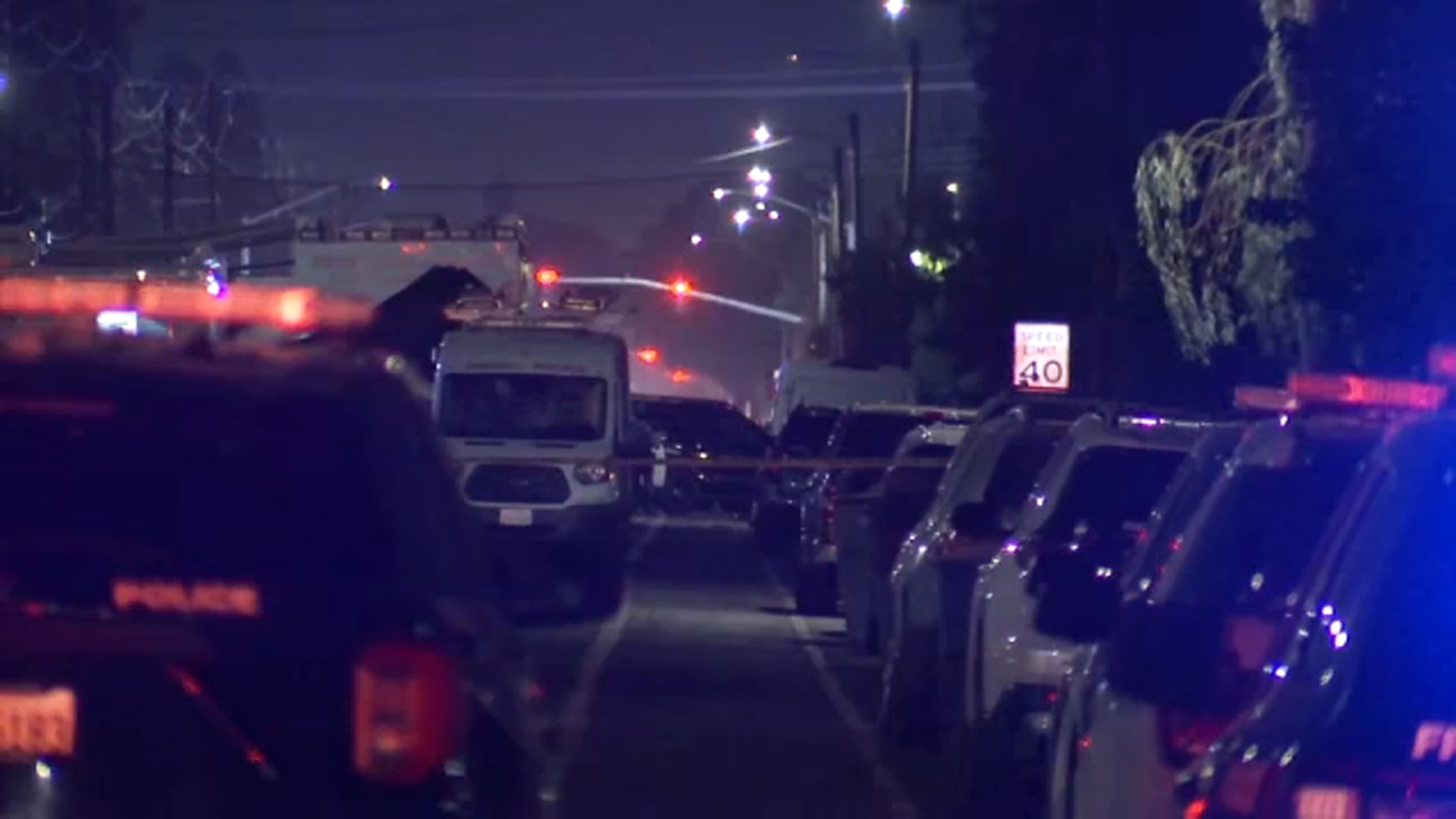
At 9 p.m. ET, the Jazz receive notice that Oklahoma medical officials will mobilize nurses and testing kits and testers to the arena to test all 58 members of the team's traveling party.
At 9:01, President Donald Trump addresses the nation about the threat of COVID-19 and announces travel restrictions for 26 European nations.
At 9:14, Tom Hanks posts on Twitter that he and his wife, fellow actor Rita Wilson, have tested positive for the coronavirus while in Australia.
At 9:15, Dr. Lisa Callahan, the Knicks' team doctor, is in a Florida restaurant celebrating her husband's birthday.
Callahan calls Knicks owner Jim Dolan and Knicks president Leon Rose, who is with the team in Atlanta.
Back in Oklahoma City, Gobert remains at the 21c Museum Hotel while players for the Thunder and Jazz remain in their respective locker rooms.
At 9:27, Shams Charania tweets that Gobert had tested positive for the coronavirus.
At 9:32, the NBA announces that a player on the Utah Jazz -- it doesn't name Gobert -- has preliminarily tested positive for COVID-19. It notes that the affected player wasn't in the arena and states that the league is "suspending game play following the conclusion of tonight's schedule of games until further notice."
The league's announcement doesn't mention other games still in progress. In Atlanta, the Knicks and Hawks are still playing. The Hornets and Heat are still playing in Miami. The Nuggets and Mavericks are still playing in Dallas. And there is another game that hasn't even tipped off yet, between the New Orleans Pelicans and the Sacramento Kings in Sacramento, California. That game -- the final one of the evening -- is slated to begin at 10:30 p.m. ET.
Soon after the NBA's announcement, Silver receives a call from Kings owner Vivek Ranadivé.

In Dallas, the second half begins between the Mavericks and Nuggets. Then-Dallas Mavericks owner Mark Cuban is sitting courtside.
When the NBA makes its announcement, a Mavericks PR staffer approaches Cuban and shows him his phone. Cuban's jaw drops at the news, and he sits back in his chair -- a moment that quickly goes viral.

Marjanovifinishes with a career-high 31 points and 17 rebounds. The Nuggets are scheduled to fly to San Antonio for a game against the Spurs, but instead they fly back home to Denver.
At 10:22 p.m., the Jazz announce that shortly before tipoff, a preliminary positive test result had been returned on one of their players -- they didn't name Gobert -- and that the player is currently in the care of health care officials in Oklahoma City.
At 10:30 p.m., members of the state health department arrive at the arena.

Oklahoma City health officials believe that because Thunder players weren't directly exposed to Gobert, they aren't at a significant risk.
At 10:32 p.m., the Hawks and Knicks finish their overtime game in Atlanta, a 136-131 Knicks win. News of the league's announcement had spread before the game ended, and the crowd chants, "We Want Vince!" Carter is sitting on the bench.
With that, 43-year-old Vince Carter, in his 22nd season, checks in with 19.5 seconds remaining in overtime.
The Knicks back off him as he launches an uncontested 26-foot 3-pointer with 13.4 seconds left.

That's why I did this [pressed palms together and looked up] and said, "Thank you, thank you!" ... That's why I was at peace with my career ending that way, more so than everyone else, which I'm very appreciative of. Because I can't imagine how miserable I'd have been the following year -- my career over, ending on a miss that they let me shoot. But I made it, and I was kind of at peace at that point.
At 10:38 p.m., Andrew Lopez, the ESPN reporter covering the Pelicans-Kings game, tweets that players from both the Pelicans and Kings have expressed concerns to the league office about playing the game and are heading back to the bus.

With minutes before tipoff, the NBA announces the game is canceled "out of an abundance of caution because one of the referees assigned to work in the game also worked a Utah Jazz game earlier this week."

When we get to the hotel, we order a bunch of wine. We're all sort of trying to decompress and come down. We're all scared. We're all on edge, to be honest with you. And at that point for those 2 hours, it was a lot of phone calls. It was a lot of texting; my wife texting me. She's like, "I'm really scared. I'm really scared. I need you to get home. I need you to get home."
We were supposed to go to Utah next, and once we realized we weren't going to play, then it became, "Can we leave now? We all want to get home now. We need to get back to our families now."
Fans in Sacramento boo the decision to cancel the game. At this point, the entire league is on hold.
But as more people began to die and the numbers didn't necessarily reflect that, people began to become more frightened and players were saying, I love the game, I love that I can make money, but it's not worth dying for.
Meanwhile, the Jazz remain quarantined in their locker room.
At 11:26, the Oklahoma City Health Department tweets that those who are in the arena "are not at risk. #COVID19 is spread through respiratory droplets. Only individuals who are in close contact would be at risk."
While the Jazz sit in the locker room, Jazz officials, along with those at the league office, work to make plans on where to stay for the night -- and how to leave.
I have no idea why all of a sudden that became my job, but they were like, Angela, call Delta, get them a flight home. My role there really was, how could I help the pilots and the flight attendants feel comfortable being on a plane with exposed individuals. So, what PPE would they have to wear? The recommendation was full PPE. So that means you're wearing a mask, you're wearing goggles, you're wearing gloves. And for a pilot to do that who isn't a medical pilot, you can imagine why there was some resistance to putting themselves in that potentially risky situation.
So my job was to really advise them, advise the flight personnel on what personal precautions they should take in order to keep themselves safe. And I don't know what negotiations went on to ultimately get the flight chartered and get them back to Utah. But I remember waking up in the very early morning the next day to tons of messages and text messages saying, "We think we found a plane. Can you please talk to the pilot and the flight attendants about what they should be wearing so that we can get them out?"
Gobert remains at the 21c hotel. Mudiay is also there. While he had tested positive for a common cold earlier that day, there's concern among Jazz personnel that he could also be positive for COVID-19, so they make a decision to keep him isolated too while they wait for Gobert's test results to return. Mudiay would test negative later that night. But word had gotten out that Gobert, who was positive, was in the hotel.

In moments of crisis, if you don't know who to call, you call the mayor. So I got sort of enlisted as a travel agent. I remember calling the head of the Convention & Visitors Bureau -- and it's pretty late at this point; I mean, at this point it's like 11 or 12 -- and enlisting his help to try to find a hotel.

Weiss, at the league office, is on the phone with Holt. Eventually, they find 47 rooms, split between a La Quinta and a Residence Inn about 10 minutes from the Oklahoma City airport.
Gobert, meanwhile, remains overnight at the 21c Museum Hotel.
At 2:14 a.m., the Jazz depart the arena on buses and head to the hotels near the Oklahoma City airport.

At 2:45 a.m. ET, NBA players receive a five-page memo from DiFiori, the NBA's director of sports medicine, and Joe Rogowski, the NBPA's chief medical officer. The memo is also sent to NBA team presidents, general managers, team physicians and athletic trainers.
The subject line: "Coronavirus -- player health." The memo begins, "In light of the recent news regarding the Utah Jazz player who has preliminarily tested positive for 'coronavirus,' and the announcement that the league is suspending game play until further notice, the purpose of this memo is to follow up with important health-related information."
By the morning of March 12, Jazz players still don't know their test results.
At 9 a.m., Elliott receives a call from team doctor Barrett about Mitchell.

So we did the whole East Coast trip. I had dinner, so I was like, "Holy s---, my family's in jeopardy. My mom, my sister, my friends. Holy s---, I could die." All these different things. That was when I was really messed up. This could really be it -- for myself, for my mom. She's older.
I'm like, "Yo..." The thing with him was, you know anything more about science and s--- than anybody else. So I'm like, "You knew the severity of it." I'm not saying that incident caused it, but you know what I mean. We sit next to each other. So for me, I was just angry. I was like, "Bro, this isn't a f---ing game." You know what I mean?
But he texted me. I definitely didn't respond. I don't remember when we spoke after that. I had done interviews. He had done interviews. I was angry. Once my family was involved with the life part of it, I was like, all right, that's everything to me. Basketball, I didn't give a f---.
Meanwhile, the Jazz continue to try to arrange travel to get home. The players and staff who had tested negative fly home on an NBA Delta charter flight on March 12.
Gobert, meanwhile, flies home March 12 on a separate plane, while Mitchell flies on a private plane to Connecticut.
When the team and Gobert land back in Salt Lake City, Dunn meets them at the airport, with members of her team. The Jazz players and staff enter an airport hangar and sit in a semicircle as Dunn addresses them.
My role was to educate them on that and to also make sure they were following rules. I mean, you kind of forget, at least I do, these are young kids for the most part. And the coach wanted to make sure that I let them know that they should not be going out and partying and they should not be flying to L.A. on their own. And really just making sure that I emphasize the importance of quarantining for themselves and the people around them, but also for their basketball team and their career.
In the hangar, Ingles, then a six-year veteran, reiterates the warning.
It's just something that I hadn't considered walking into that environment that you're actually dealing with young kids. I mean 19-, 20-year-olds who might not completely understand the gravity of the situation.
Our team also made a connection with the wives of the players or parents for those of them who still had their parents in their house. And we actually had daily connections with their families as well because they were extremely worried and wanted to know what to look out for in their own homes. So I took care of the players, and then one of my colleagues took care of the players' families. This was also when you had to test more regularly, so we also had to assign a local health department nurse to go to Rudy's house to test him regularly as well.
Epilogue
Obviously it was very scary. And obviously everything that happened after that, it was a very tough experience as a human being. The next month after that was one of the most challenging stretches of my life in every aspect. I mean, the world questioning my intentions and then the fear. After that, I had different symptoms. The fear of what's going to happen to me in terms of health, reading a lot of different things and wondering pretty much ... why me?
People afterwards, they were like, "What were you thinking?" I was like, "It was all about eyes and ears. Keep my eyes wide open and my ears wide open and gather everything that I can in this moment. And then just say it back."
On March 12, the National Hockey League and Major League Soccer suspend their respective seasons, Major League Baseball cancels spring training games and delays the start of its season, and the NCAA cancels its men's and women's basketball tournaments.
On Friday, March 13, Paul, the president of the NBPA, is tested for COVID-19 in Oklahoma City, after which he flies back home to Southern California, eager to see his family. But because he doesn't have his test results, he sits in his car in his driveway, according to "The Day Sports Stood Still," waiting, because he doesn't want to expose his family members, who are inside his home.
His wife brings him food. He can see his family members through the window, and they can see him sitting in the car. He avoids physical contact with them over the next four days until, on March 17, Paul receives his results. He enters his home to find his son. But before his son approaches, he pauses.
Then Paul tells him the test results: negative. The two share a long embrace.
Four months after Gobert's positive test, the NBA resumes its season at Walt Disney World Resort outside Orlando, Florida.
Additional reporting from ESPN's Jamal Collier and Michael C. Wright. Interviews from 2020 are from ESPN's 30 for 30 podcast, "March 11, 2020."