Study highlights delays in Valley fever diagnosis and urges clinician awareness


FRESNO, Calif. (KFSN) -- A new study is drawing attention to delayed diagnoses of Valley fever and the need for greater awareness among both the public and health care providers, particularly in California's Central Valley.
Nurse practitioners who co-authored the study say many patients experience significant delays before receiving an accurate diagnosis, often leading to inappropriate treatment.
The findings point to gaps in recognition of the disease and underscore the importance of earlier testing and clinical vigilance.
"If you live in the Central Valley, you work, or you know do business around here, you had risk of valley fever, but, you know, you might not get infected. But the awareness really kind of helps," said Dr. Ayomidamope Adebiyi, a family nurse practitioner and clinical lead for Occupational Health Services at UC Merced.
According to the study, about 60% to 80% of people with Valley fever do not receive the correct diagnosis until roughly 23 days after their first doctor's visit, if they are tested at all.
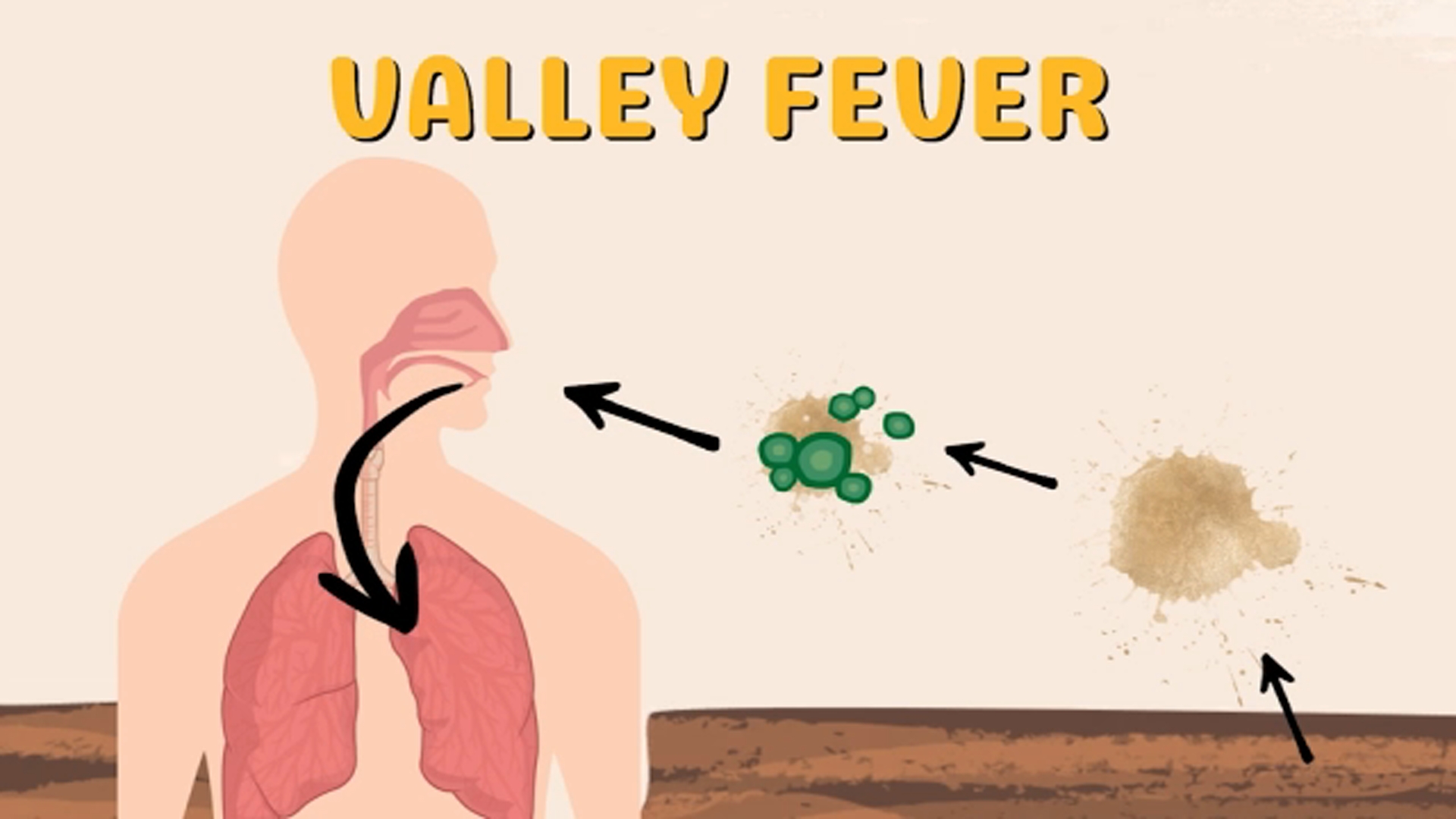
Valley fever is a fungal infection caused by Coccidioides, which lives in soil in endemic regions such as California's Central Valley, parts of Arizona and other areas of the southwestern United States.
It is not spread from person to person. Instead, infection occurs when microscopic spores become airborne through soil disturbance caused by wind, construction, farming or similar activities and are inhaled.
"Coccidioides, this is a fungus that thrives in this kind of climatic environment that we have in the Central Valley, the South, and the western part of the United States," Dr. Adebiyi said. "When this gets into the respiratory tract, it creates an infection in the lungs area, and in that kind of situation, that inhalation really would present the symptoms."
Symptoms such as fever, fatigue and night sweats often resemble common respiratory illnesses, which can contribute to delayed diagnosis and misdirected treatment.
Researchers estimate that there may be hundreds of thousands of symptomatic cases nationwide each year, far exceeding official case counts.
Contributing factors cited in the study include climate change, soil disruption and population growth, all of which may be expanding the disease's reach.
"Antifungal is the treatment. And I think prescribing the wrong medication and not really looking at the big picture, it's one of those things that we kind of address, and we're bringing it to the forefront of nurse practitioners," Dr. Adebiyi said.
The paper also stresses the importance of clinician awareness, particularly in regions where exposure risk is high.
"Early recognition also starts from clinicians actually being aware of it. You know, the clinical awareness is key," Adebiyi said. Dr. Mary Estrada, a nurse practitioner and an assistant faculty member at the University of Arizona who also co-authored the study, said the goal is to reduce diagnostic delays.
The study promotes the use of the COCCI framework to guide clinical decision-making. The approach is adapted from the management framework developed by the Valley Fever Center for Excellence to support clinical decision-making.
"COCCI, which is considered the diagnosis order, the test, check for risk factors, check for complications, and then initiate management. And that's just an easy way for providers to remember," Estrada said.
Both researchers emphasized education and awareness as key steps in improving patient outcomes. They also noted that most people who recover from Valley fever develop lifetime immunity to reinfection.
The authors hope their findings will encourage earlier testing, more accurate treatment and greater awareness of a disease that continues to affect communities across the Central Valley and beyond.
Danyelle Burke North: For news updates, follow Danyelle Burke North on Instagram and TikTok.



.jpg)